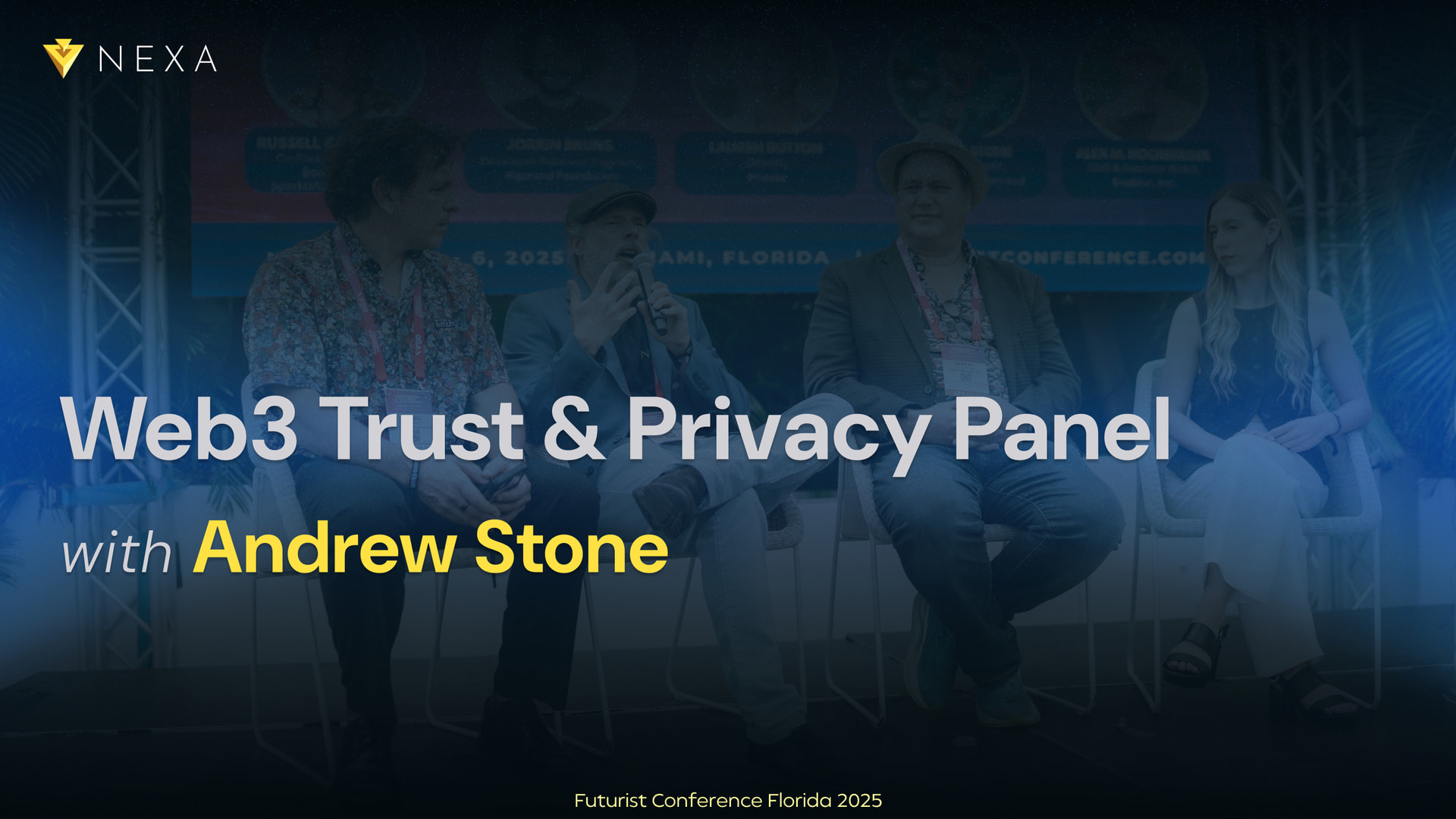
Nexa concluded a successful presence at the Blockchain Futurist Conference Florida 2025, where the project participated as a Gold Sponsor. Held on 5–6 November 2025 at the Hard Rock Guitar Hotel & Daer in Miami, the event brought together blockchain researchers, infrastructure builders, exchanges, and industry leaders from across the Web3 ecosystem. As part of the conference program, Founder and Lead Developer of Nexa, Andrew Stone, participated in the panel discussion “Scaling Trust: Developers Building Privacy and Communities in Web3”, addressing key challenges around privacy, trust, and developer design trade-offs in modern blockchain systems.
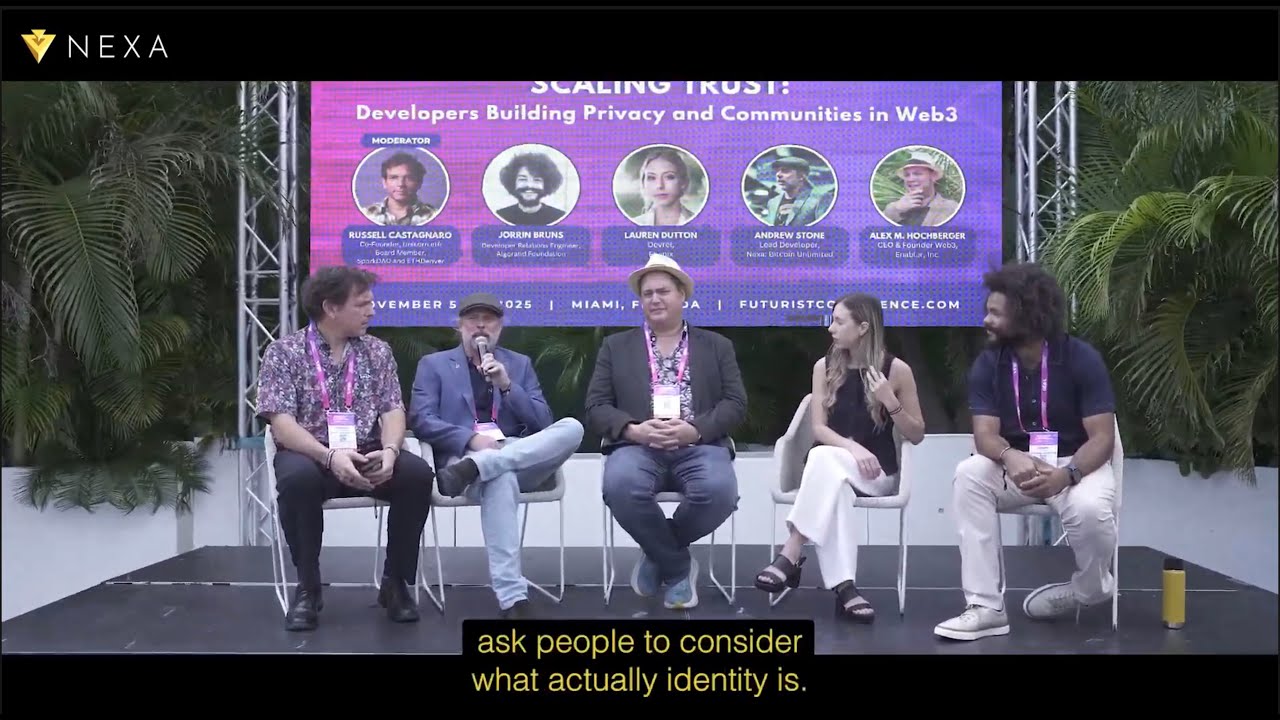
Privacy, Transparency, and Identity in Web3 Systems
A central theme of the discussion is the tension between blockchain transparency and the practical need for privacy. Panelists explore how early cypherpunk and crypto-anarchist ideals emphasized resistance to surveillance, while modern public blockchains expose transactional data by default. This paradox has implications not only for individual users, but also for enterprises whose on-chain activity can reveal sensitive commercial information.
The panel frames identity as the ability to link actions across time and context to a single entity, emphasizing that meaningful privacy is not absolute concealment but selective disclosure. Technologies such as UTXO-based transaction models, address rotation, zero-knowledge proofs, and selective off-chain components are discussed as approaches for balancing auditability, regulatory requirements, and protection against unwanted inference.
Trust, Smart Contracts, and Developer Responsibility
The conversation also examines how trust is established in permissionless environments where users interact with smart contracts and decentralized applications. While transparency enables code audits and formal verification, panelists note that readability alone does not guarantee safety. Instead, trust emerges from a combination of technical rigor, community review, and reputational signaling.
Andrew Stone outlines Nexa’s approach to reducing accidental or opaque contract execution by making state changes explicit at the transaction level. By clearly enumerating what a transaction can and cannot do before execution, this model is intended to improve user understanding and confidence without compromising permissionless design. The broader discussion places these ideas within the historical evolution of trust mechanisms on the web, drawing parallels to citation models, reputation systems, and social validation.
Wrap Up
Participation in large-scale industry events such as Blockchain Futurist Conference Florida 2025, including active involvement in panels and keynote sessions, continues to strengthen Nexa’s visibility within the broader Web3 ecosystem. We appreciate the continued engagement of our Lead Developer in representing the project and contributing technical perspectives that reflect Nexa’s design principles. Over time, this consistent effort supports Nexa’s long-term objective of driving adoption through practical utility and technical rigor, rather than short-term trends or temporary hype.