Highlighting July with hardware acceleration could not be more exciting. After a long period of research, testing, and development, the Blitz project is coming together, and the team is looking forward to publishing a series of articles that motivate and explain the technology behind it. This month we started that series with the article on why Nexa builds hardware.
No less important was the publication of Nexa’s 4th Anniversary Spaces recap, in which the lead developer provided insights into where the project is heading, how core blockchain improvements such as Tailstorm are progressing, and more.
Alongside these, there is plenty more to cover: an updated Nexa roadmap for 2026 and 2027, newly released features, the updated explorer, the Wally wallet patch, and everything else recapped below.
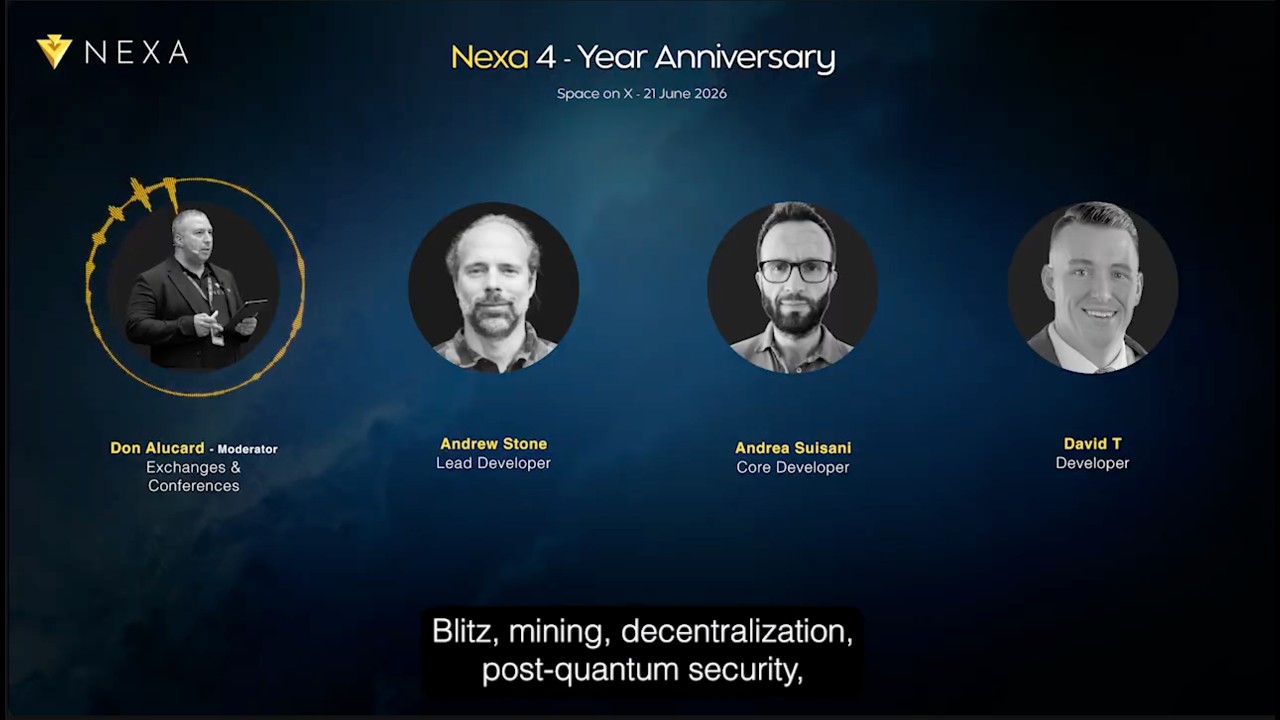
Nexa 4th Anniversary Spaces with Andrew Stone, Andrea Suisani and David Thibodeau
The hardware work is one chapter in a much longer story. Four years ago, Nexa launched with a small group of people, a very ambitious technical vision, and the belief that scalable peer-to-peer electronic cash could be taken much further. Since then, Nexa has grown through changing market conditions, technical challenges, major infrastructure development, new applications, conferences, ecosystem growth, and now its first halving.
Four years is a meaningful milestone, especially in an industry where projects, technologies, and entire narratives can appear and disappear very quickly. Nexa has continued building through it all. To mark the anniversary, the team came together for a live Space to look back on the journey, discuss lessons learned, explore what is being built right now, and consider the direction Nexa will take as it enters its fifth year. Special thanks go to Don Alucard for moderating the event.
Read more:
Why Nexa Builds Hardware
Imagine a microchip that can do the same thing as your software node, but is faster, more reliable, uses less energy, and can be built for a fraction of the cost. This is not a distant dream, but the direction Nexa has been working toward for years.
Nexa Chief Scientist Dr Peter Rizun designed Blitz, hardware that verifies digital signatures and removes the dominant compute bottleneck for scaling cryptocurrencies.
To understand the benefit of hardware acceleration, we first need to go back to when the first Bitcoin block was mined. Since then, computing hardware has improved more than 1,000,000-fold, and the same scale of improvement is available to cryptocurrencies.
Read more:
NEXA Development Roadmap 2026-27
All of this work fits into a longer plan. The Nexa Team is excited to introduce the Nexa Development Roadmap for 2026 and part of 2027. The roadmap includes long-anticipated blockchain improvements and important infrastructure projects coming together. It is not limited to these developments, and there are plenty of side projects and ongoing work in parallel. The roadmap provides a strong signal of where Nexa is heading this year and early next year. The coming two years are set to have major releases, and many complex developments have been underway for some time. Blockchain projects and ecosystem applications are organized into different streams based on whether they focus on the blockchain protocol or on business-facing use cases.
There are two main areas of development: blockchain projects and applications, both of which serve to enable Nexa to handle 21st-century finance. This completes the original plans for the coin and is important to growing strength within the Nexa network moving forward.
Read more:
Monthly Development Updates: June 2026
Behind the milestones, the daily work continues. June was a month of consolidation and construction. The largest task is still the second hard fork, with a sweeping locking and validation rework. It is being carved into smaller, reviewable chunks that land one at a time. Alongside that, the block explorer had its busiest month so far, smart-contract tooling was pushed to its limits with the Nexa Warriors contract suite, and time-lock vaults came within sight of completion.
Read more:
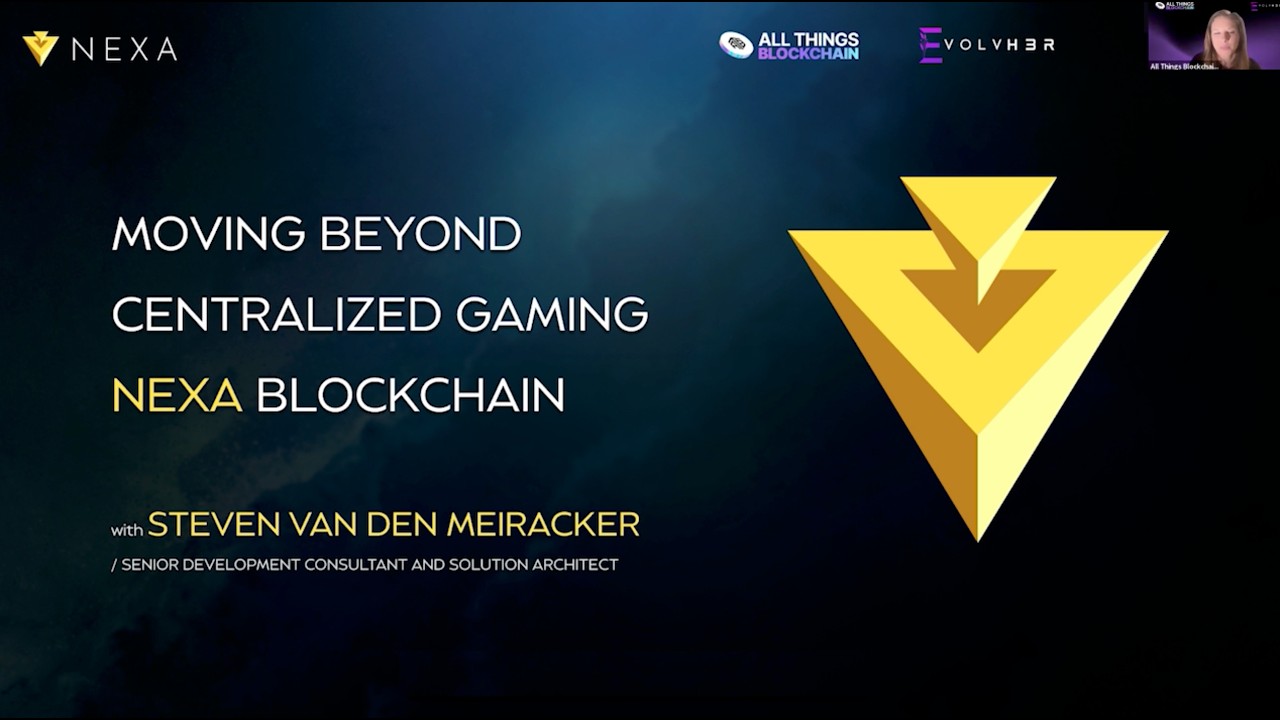
Moving Beyond Centralized Gaming: Nexa Blockchain with Steven van den Meiracker
One of those business-facing use cases was on display this month. In a recent webinar on gaming with EvolvH3R, Nexa’s Senior Development and Solution Architect, Steven van den Meiracker, presented Nexa Blockchain, its architecture and strengths, and highlighted how it can be integrated with the gaming ecosystem and used as infrastructure to explore digital assets beyond gaming.
In-game assets can now truly belong to players, and that is more than just a promise. Steven showcased a demo of a new on-chain card game, “Nexa Warriors”, which is currently in development. Beyond the gameplay experience, users will be able to trade game cards on marketplaces and use them in additional ways that are still being explored.
Read more:
Nexa Explorer: New Features
The explorer’s busy month also brought another round of improvements. The main page was refreshed, and the transaction view was reworked so it reads properly on phones, meaning you can now see inputs and outputs clearly on any device.
Another notable delivery is self-hosting. Anyone with some technical knowledge can now run the explorer on their own machine, and a single command is all it takes to set up a local instance.
There are also smaller touches that matter in everyday use: improvements to the Token Authorities tab, better visualization, and Nexa Fun, the page that surfaces historical and interesting events on the blockchain.
Read more:
NexScript Playground Upgrades
Developer tooling moved forward as well. We are pleased to announce that the NexScript Playground has been upgraded with major improvements. A full code editor has been added, along with five example contracts to help developers get started coding advanced transactions. The playground is connected to the network, and you can write, test, and interact with the contracts straight from the website.
Read more:
An Artifact of the 4th Nexa Anniversary
Tokens found a use closer to home as well. Nexa was launched on 21 June 2022, and on 21 June 2026, the team commemorated its 4th anniversary by organizing Spaces on X with the founder and lead developer, Andrew Stone.
Everyone who participated and listened to the event had a chance to post their Nexa address to receive a commemorative NFT celebrating the occasion.
Read more:
Wally Wallet: New Patch 3.30.02
On the wallet side, thanks to the beta testers and the Nexa developers, a new stability patch has been released. Wally 3.30.02 is already available on the Google Play Store and the App Store. This patch addresses glitches in new experimental features, optimizes the synchronization spinner to improve battery life, and fixes some rare crash cases.
Read more:
Wally Wallet: Peer-to-Peer Offers
Wally has also had a very special feature for quite some time, and it is time to review it. Any peer-to-peer trade can be made directly in the Wally Wallet, exchanging Nexa coins for tokens or NFTs. This feature creates a decentralized exchange model without an exchange itself, working with no smart contracts or other dependent platforms.
Read more:
To Wrap Up
July was a hot month, with many developments, releases, and ongoing work across the board. The most anticipated projects are Blitz hardware acceleration and Tailstorm’s directed acyclic graph model integration with the Nexa blockchain. These are moving forward and coming together near other important ecosystem infrastructure, and it is getting exciting as it starts to unfold.
The team is also accelerating, and a lot is happening behind the scenes with many projects starting to get in good shape. This was a recap of July 2026, and we are getting back to developments. See you in next month’s newsletter!